


Spread Spectrum

Spread Spectrum

What was once a communications mode shrouded in secrecy has entered the consumer market in the form of wireless ethernet links, cordless telephones, global position service (GPS), Personal Communications System (PCS), and digital cellular telephony (CDMA). And what are radio amateurs doing with spread spectrum today? In 1980, the FCC expressed a desire to extend spread spectrum communications outside of the military-only realm and allow radio amateurs to experiment with spread spectrum communications. The FCC in following Title 47, Section 303 of the Code of Federal Regulations (CFR) shall…
TAPR Statement on Spread Spectrum
“TAPR believes that the technical facts support our conviction that conventional and spread spectrum systems can coexist without detriment to conventional systems on all frequencies from MF to EHF. To this end, TAPR will begin to research spread spectrum systems that will develop technology for future deployment.”
DSP-10 (SDR)
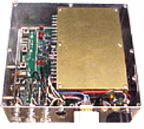
The DSP-10 is an amateur-radio, software-defined 2-meter transceiver that can be built at home. It operates on SSB, FM and CW modes. Features are tailored to operation with weak signals on VHF, UHF and Microwave frequencies. The transceiver is low power, about 20 milliwatts, but there is provision for adding an 8-Watt amplifier…
Current FCC Rules (archived page heading)
Report Order WT 97-12
Modified the Rules for Amateur Radio Spread Spectrum Amendment of the Amateur Service Rules to Provide For Greater Use of Spread Spectrum
Past Rules on Spread Spectrum Operations under Part 97
The Rules and Regulations that govern the Amateur Radio Service come from Title 47 Part 97…
Voice Link Over SS Radio
Tim Shepard MIT Thesis

This thesis addresses the problems of managing the transmissions of stations in a spread-spectrum packet radio network so that the system can remain active when scaled to millions of nodes concentrated in a metropolitan area. The principal difficulty in scaling a system of packet radio stations is interference from other stations in the system. Interference comes both from nearby stations and from distant stations. Each nearby interfering station is a particular problem, because a signal received from it may be as strong as or stronger than the desired signal from some other station. Far interfering stations are not individually a problem, since each of their signals will be weaker…
VK2TDS SS Thesis

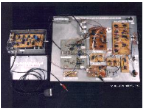
This thesis report looks at the interaction between spread spectrum technologies and the equally as new packet radio technologies. It has only been in the last 15 years with increased computerisation that either of these technologies have seen significant work. This thesis also looks at some of the hardware required to implement a spread spectrum packet transmission system. During the design process I incorrectly assumed that PSK modems could be operated successfully at the chip-rate. Due to factors outside my control this assumption was not discovered until after the circuit boards had been produced. …
TAPR’s Position Statement on Spread Spectrum Technology Development
The following statement was adopted by Tucson Amateur Packet Radio, Corporation Board of Directors on September 20th, 1996 in Seatac, Washington.
TAPR was founded in 1982 as a membership supported non-profit amateur radio research and development organization with specific interests in the areas of packet and digital communications. In the tradition of TAPR, the Board of Directors at their Fall 1995 meeting voted that the organization would begin to actively pursue the research and development of amateur radio spread spectrum digital communications. At the Spring 1996 board of directors meeting, the following statement of purpose was passed:
“TAPR believes that the technical facts support our conviction that conventional and spread spectrum systems can coexist without detriment to conventional systems on all frequencies from MF to EHF. To this end, TAPR will begin to research spread spectrum systems that will develop technology for future deployment.”
As stated above, the TAPR board feels strongly about TAPR’s focus on spread spectrum technology and especially how it relates to the potential coexistence on frequencies that will have increased number of users occupying them. The amateur radio bands, like other spectrum will become more heavily utilized in the future. It is in the interest of amateur radio to develop systems that are interference-resistant while not interfering with other primary or secondary users on those frequencies.
TAPR understands the concerns many have with the new technology, and believes that efforts in both education and research is necessary in order to allay the fears about interference and to demonstrate the benefits of the technology.
TAPR believes that todays’ communications technology is moving toward all digital transmitters and receivers. These advances in technology, combined with the swift evolution of cell based transmission and switching protocols, are opening up a new set of possibilities for unique new services utilizing intelligent networks. These will contain smart transmitters, receivers, and switches. Today’s Internet is perhaps the best example of a self-regulating structure that embodies these new technological approaches to communications in the networking domain. However, to date, many of these innovations have not moved into the wireless networking arena. TAPR will work on moving these innovations into the amateur radio community.
TAPR feels that the VHF/UHF/SHF radio networks of the future will involve a mixture of links and switches of different ownership, which terminate at the end-user via relatively short-distance links. What will then be required is a built-in, distributed, self-governing set of protocols to cause the network’s behavior to make more efficient use of a limited, common shared resource, the radio spectrum. Creating such a self-regulating structure for the optimal sharing of spectrum will require much effort.
One of the major problems which stands in the way of these new approaches today is the current FCC regulatory environment and the manner in which spectrum is managed and allocated under its rules.
Historically, the current regulatory approach to radio has been based upon the technology that was in use at the time that the Communications Act of 1934 was framed, basically what we would call today, ‘dumb’ transmitters speaking to ‘dumb’ receivers. The technology of that time required reserved bandwidths to be set aside for each licensed service so that spectrum would be available when needed. Given this regulatory approach, many new applications cannot be accommodated since there is no available unallocated spectrum to ‘park’ new services. However, given the new set of tools available to the entrepreneur with the advent of digital technology, what once were ‘dumb’ transmitters and receivers can now be smart devices which are capable of exercising greater judgment in the effective use and sharing of spectrum. The more flexible the tools that we incorporate in these devices, the greater the number of uses that can be accommodated in a fixed, shared spectrum.
Therefore, TAPR will focus its spread spectrum effort in the following areas:
- TAPR will work to promote rules and technologies to make the most efficient use of the spectrum through power control, forward error correction, and other means to minimize interference among spread spectrum users and existing communications systems.
- TAPR will work on issues and efforts with other national organizations to change the regulatory environment and rules in order to promote the experimentation, development, and later deployment of spread spectrum technology.
- TAPR will work to develop information on the topic to help educate members and the amateur community as a whole about spread spectrum technology, and to disseminate this information via printed publications, the World Wide Web, presentations at conferences and meetings, and other means.
- TAPR will work to foster experimentation, development, and design of spread spectrum systems, and to facilitate the exchange of information between the researchers and other interested parties.
- TAPR will work to develop a national intra-network to foster the deployment of future high-speed spread spectrum systems into regional and local communities, including the development of suitable protocols and guidelines for deployment of these systems.
- TAPR will work with commercial companies who manufacture spread spectrum devices which operate in spectrum shared by the amateur radio service (ARS), in order to make them more aware of the nature of ARS operations on those bands with the goal to work towards the deployment of devices which will minimize interference between all spectrum sharing partners.
- TAPR will work with commercial companies who manufacture spread spectrum devices in order to identify equipments that can be either used or modified for use for Part 97 operation.
Adopted by the TAPR Board on September 20th, 1996 at Seatac, Washington Board Meeting.
Spread Spectrum Statement Committee:
- Greg Jones, WD5IVD
- Dewayne Hendricks, WA8DZP
- Barry McLarnon, VE3JF
- Steve Bible, N7HPR
Archived overview last updated: April 11, 2008. Archived statement page last updated: March 23, 2008.
© 2007 Tucson Amateur Packet Radio Corp.
Combined archival overview and position statement.